
Swing Gate
The swing gate is the simplest gate type and the one that asks for the least maintenance at narrow entrances and pedestrian openings.
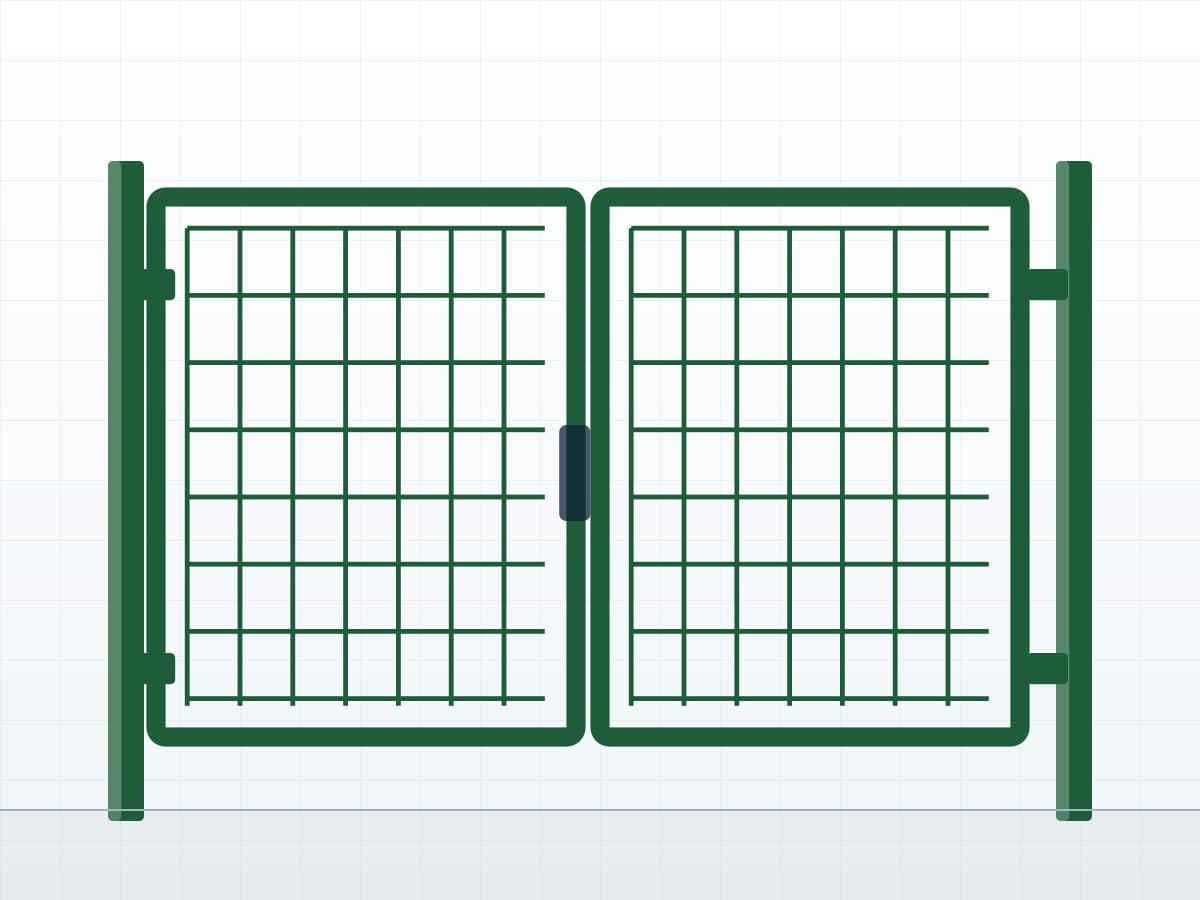
The mechanism of a swing gate is nothing more than its hinges; there is no track, motor or support arm. With few moving parts there is little to go wrong. On the other hand the whole weight of the leaf rests on a handful of hinges, so as the leaf gets wider the gate starts to drop.
The slope of the ground is decisive for a swing gate. If the gate opens uphill, enough clearance must be left between the bottom edge of the leaf and the ground; if that gap is left too large the gate loses its purpose. Where the climb is steep, making the gate open inwards rather than outwards is usually the right answer.
On a double gate the closing order matters. The fixed leaf is locked to the ground with a drop bolt, the moving leaf closes against it, and the lock is fitted only to the moving leaf. Without that arrangement the two leaves part when forced, because the lock cannot carry the load alone.
Frequently asked questions
At narrow and medium width entrances a swing gate is both more economical and less demanding to maintain. As the opening grows the weight of the leaf strains the hinges, and at those sizes moving to a sliding gate is the sounder choice.
Yes, it can be automated with ram or articulated arm motors fitted to each leaf. The motor is selected for the weight and width of the leaf; at entrances exposed to wind we recommend a perforated panel rather than solid sheet.
Get a quote for Swing Gate
Tell us the length and the condition of the ground; we will send your detailed quote within 48 hours of the survey.